Sleep Science Briefing
How to Increase Deep Sleep Naturally: What the Evidence Actually Supports
Everyone wants more "deep sleep." Wearables turned that desire into a scoreboard. That can be useful — or a trap. This article is about slow-wave sleep (N3), what actually changes it, and what biohacking culture gets wrong when it promises overnight transformation.
Medical disclaimer: This article is for informational purposes only and does not constitute medical advice. Consult a qualified healthcare professional before changing your supplementation or sleep routine, especially if you have a diagnosed sleep disorder.
Introduction — why deep sleep is the most underrated health metric
If you only tracked one sleep variable for vanity, deep sleep would still be a strange pick. Not because it's meaningless — because the number on your wrist is a guess. The physiology, though, is real. Slow-wave sleep is when the brain leans into low-frequency activity, body systems shift into repair mode, and memory consolidation machinery runs in a way that lighter sleep can't fully replace.
I still meet people who treat "deep sleep" like a supplement stack problem. Sometimes it is, marginally. Most of the time it's a heat, light, movement, and consistency problem. If you ignore those layers, you'll eventually hit a ceiling no matter how exotic your bedtime routine looks on Instagram. For the behavioral foundation, our sleep hygiene guide is the right companion piece; here we zoom in on N3 specifically.
One more bias check before we proceed: deep sleep is not the only sleep stage that matters. REM has its own jobs. The architecture is cyclic for a reason. The goal isn't to brute-force one stage into dominance — it's to stop sabotaging the cycle and occasionally nudge it in a favorable direction when evidence supports the nudge.
PubMed reference: PMID: 23589831
What actually happens during deep sleep (slow-wave sleep explained)
In modern scoring, deep sleep maps onto N3 — non-REM sleep with prominent slow waves and high arousal thresholds. It clusters early in the night. That timing matters clinically: interventions that only "improve sleep" on subjective surveys might miss whether the early-night slow-wave window changed at all.
Mechanistically, slow-wave sleep is busy. You get slow oscillations, spindles, and hippocampal sharp-wave ripple activity interacting in ways that support consolidation — the brain rehearsing and reorganizing what you learned while awake. If you want a single takeaway, it's this: deep sleep is not passive downtime; it's structured maintenance, and you cannibalize it when you drink wrong, heat wrong, or light wrong.
The biohacker fixation on "more minutes" misses the deeper point: quality and timing of slow waves matter, not just a label on a chart. Researchers now try to enhance slow-wave activity with audio pulses, stimulation, and pharmacology. Some approaches boost slow-wave power. None of that makes consumer wearables accurate enough to guide obsessive micro-optimization night to night.
PubMed reference: PMID: 30923474
Temperature manipulation: the most reliable deep sleep lever
Heat is not abstract. It is a dial on sleep depth. Controlled work shows you can change slow-wave expression by manipulating the relationship between core temperature and skin temperature — the classic "warm skin, cooling core" handshake that helps initiate sleep. That's why a hot bath late, followed by a cooler room, feels like a cheat code for some people.
I don't sell cold plunges as mandatory. I sell predictability. If your bedroom turns into an oven at 2 a.m. because the building's HVAC is fighting you, that's not a willpower issue. It's an environment issue — and it will steal depth from the early cycles where N3 concentrates. Fix the room, the bedding, and the airflow first. Then worry about gadgets.
Skepticism applies to brands that promise "sleep deep" mattress features without published, independent validation. Thermoregulation is real. Marketing extrapolation often isn't.
PubMed reference: PMID: 18192289
Exercise timing and intensity: what the data shows
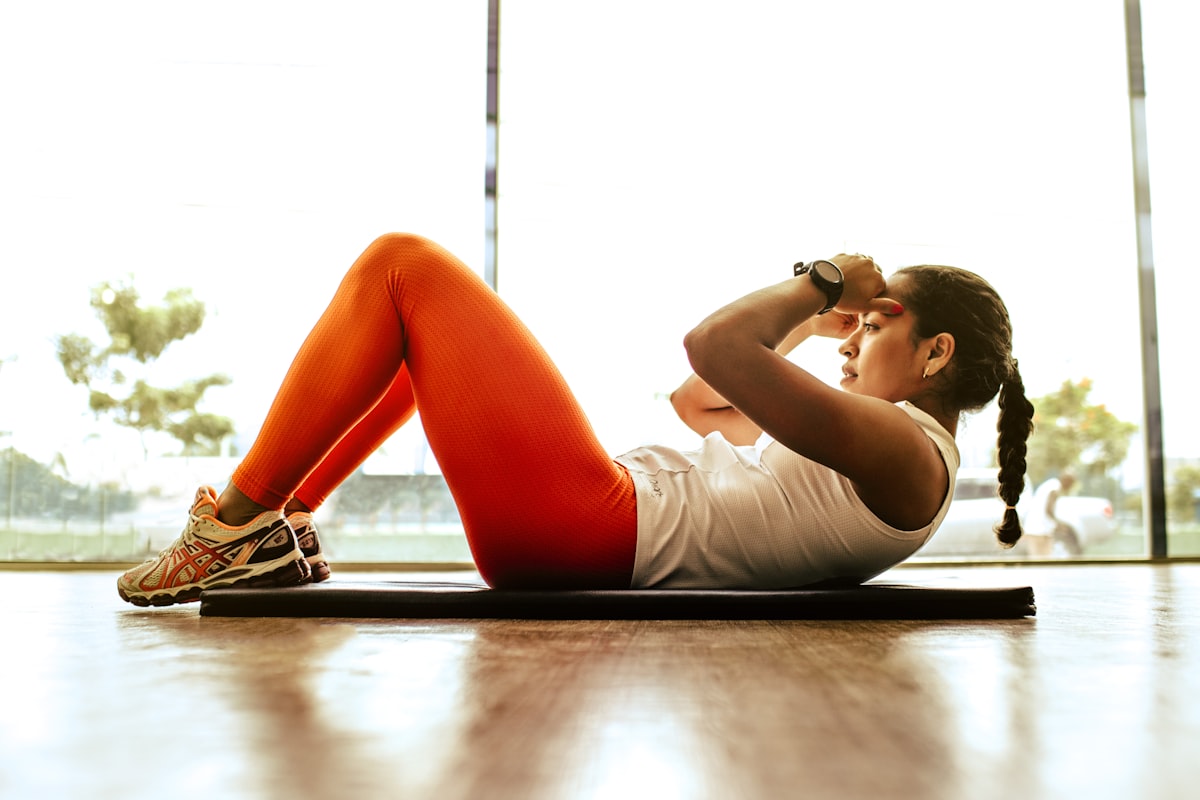
Exercise is the boring intervention with a strong signal. It improves sleep quality in the messy, real-world sense — fewer thrashing nights, better continuity for many people, and measurable EEG changes in slow-wave measures in controlled work. It's also where bro science goes wrong by turning "evening training is bad" into a universal law.
A large systematic review found evening exercise could actually increase slow-wave sleep by small but statistically significant margins on average, while also changing REM latency and stage 1 sleep. That doesn't mean you should crush a max-effort lift 20 minutes before lights-out. It means the timing and intensity moderators matter — especially body temperature at bedtime and how "hard" the session was relative to your baseline.
If you want N3-friendly training, bias toward consistent aerobic work you can recover from, and keep the panic sessions earlier when possible. Deep sleep likes a cooled-down nervous system more than it likes your new PR badge. Controlled exercise interventions also show objective delta-power shifts in slow-wave sleep even when people do not report feeling "more rested" yet — the EEG can move before subjective scores catch up.
PubMed references: PMID: 30374942; PMID: 33627708
Alcohol: why it destroys deep sleep architecture
Alcohol is the classic sedative lie. It can make you feel sleepy. It can even change the first part of the night's EEG in ways that look superficially "deeper" at high doses. Pull back to the full night, and the architecture story stops being comforting — fragmentation, REM disruption, and dose-response effects show up across reviews.
I'm not here to moralize about drinks. I'm here to be precise: if your goal is more restorative slow-wave sleep across the whole night, alcohol is usually on the wrong side of the ledger. It's a trade. Know the price before you pay it.
This is also where "I sleep fine on whiskey" misses the point — subjective sleep and objective architecture diverge all the time. Your confidence is not a polysomnography lab.
PubMed reference: PMID: 39631226
Supplements with actual evidence (magnesium, ashwagandha, glycine)
Magnesium gets oversold as a blanket sedative. The better-framed claim is narrower: in older adults with insomnia, pooled RCT data suggest magnesium can improve some sleep-onset measures, with the usual caveats about bias and effect sizes. That's not the same as "guaranteed deep sleep boost for everyone." If you want the full mechanistic breakdown focused on glycinate specifically, read magnesium glycinate for sleep — we keep the claims tied to trials there.
Ashwagandha is the adaptogen people love to stack. Meta-analyses of RCTs report small improvements in sleep measures, with stronger-looking effects at higher doses and longer courses in insomnia populations. It's not risk-free; it's also not a substitute for light, temperature, and schedule. Glycine has human data suggesting it can shorten latency to slow-wave sleep and improve subjective sleep quality in constrained designs; the effect sizes won't turn a wrecked routine into elite recovery by themselves.
My rule: one compound at a time, minimum four weeks for fair testing, and no stacking three sedating supplements when you haven't fixed caffeine after lunch. That isn't caution as personality — it's how you learn what actually moves your nights.
PubMed references: PMID: 33865376 (magnesium); PMID: 34559859 (ashwagandha); PMID: 22529837 (glycine)
Light exposure and circadian alignment
Deep sleep doesn't exist in a vacuum. It's scheduled by circadian and homeostatic processes. If your brain thinks it's two hours earlier than your alarm admits, you'll fight the night. Morning bright-light protocols can phase-advance melatonin rhythms and are a first-line tool in clinical circadian work — not because they "hack deep sleep directly," but because they tighten the timing system that gates when slow-wave pressure expresses itself.
Evening light is the opposite lever. Bright, blue-enriched screens late can delay melatonin and reshape sleep onset — which shifts where N3 lands. I'm less interested in fearmongering than in dose: photons, distance, duration. Dim, warm, and boring wins most nights.
If you only do one circadian habit without buying anything, make it outdoor light shortly after wake. Pair that with the behavioral spine in our sleep hygiene guide and you've built a real foundation.
PubMed reference: PMID: 25620199
What doesn't work (debunking common myths)
Myth one: your wearable's "deep sleep" minutes are medical truth. Validation studies show a wide spread in how well consumer devices agree with polysomnography. You can use the trend line — I do sometimes — but treating night-to-night stage minutes like a gradesheet is a recipe for orthosomnia-style anxiety.
Myth two: more supplements always equals more N3. Most stack photos are confounded: the person also fixed caffeine, alcohol, exercise, and daylight at the same time — then credited ashwagandha microdose #7 for the win. Correlation masquerading as mechanism.
Myth three: longer time in bed increases deep sleep linearly. Sleep restriction components in CBT-I sometimes look paradoxical, but they work partly by rebuilding sleep pressure and tightening the association between bed and sleep. More hours in bed while awake can dilute depth, not enhance it.
PubMed reference: PMID: 37917155
Building your deep sleep protocol
Start with non-negotiables: stable wake time, morning light, caffeine cutoff, alcohol cutoff, room temperature you can hold through the night, and exercise you can sustain. Those five cover more variance than most peptide forums want to admit. After that, layer trials — one change at a time, same measurement protocol for at least two weeks.
If insomnia is chronic, behavioral therapy principles belong in the conversation. Cognitive behavioral therapy for insomnia packages stimulus control, sleep restriction, and cognitive work with evidence that embarrasses most gadget-first stacks. It's not flashy. It works.
We publish long-form work slowly; our index of research articles is the place to watch for new pieces that pass that bar.
PubMed reference: PMID: 36908717
Conclusion
Deep sleep rewards basics done consistently: thermoregulation that doesn't fight you, light that respects the clock, alcohol that isn't stealing the second half of the night, and exercise that's hard enough to matter but not so late that you carry a furnace into bed.
Supplements can be small amplifiers for some people. They're not the engine. The engine is the daily loop your biology recognizes — regularity, contrast between day and night, and enough sleep opportunity to let N3 show up where it belongs. Everything else is detailing on the car.
Stay skeptical of anyone promising a guaranteed bump in deep sleep minutes by Tuesday. The science is real; the marketing is louder.
PubMed reference: PMID: 31105512
FAQ
How much deep sleep do I need per night?
There's no universal quota. N3 varies by age and night-to-night context; wearables estimate it imperfectly. Prioritize adequate total sleep, stable timing, and daytime function — then use trends cautiously if you track.
What supplements increase deep sleep?
Evidence is mixed and rarely N3-specific. Magnesium, ashwagandha, and glycine each have human trials or meta-analyses worth reading before you buy tubs of powder. Treat them as experiments, not guarantees.
Does alcohol affect deep sleep?
Yes. Reviews in healthy adults show alcohol disrupts sleep architecture; sedating onset is not the same as healthy slow-wave-heavy continuity across the night.